

Magazine
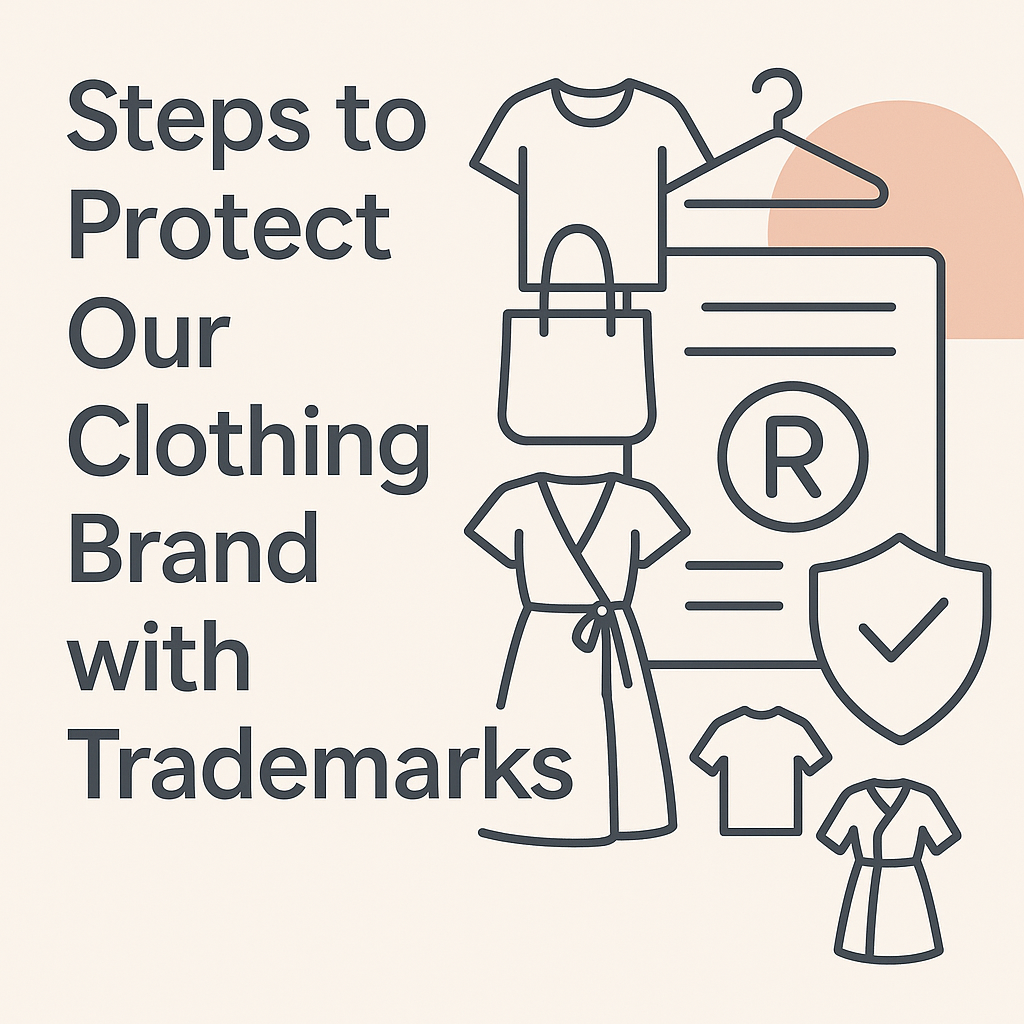
Steps to Protect Our Clothing Brand with Trademarks
Why Trademarks Matter for Our Clothing Brand
We protect our brand’s identity and future by registering and guarding names, logos, and signature designs that make us unique. Trademarks build customer trust, deter imitators, and create long-term value so our clothing stands out in a crowded market today.
What We’ll Need
Understand What Trademarks Actually Protect
Did you know a name or logo can be more valuable than the product itself?Clarify what trademarks cover. Trademarks identify the source of our clothing — they protect brand names, logos, slogans, and distinctive design elements that tell customers the product is ours.
Identify protectable items on our products. Examples: our woven label that reads “NOVA,” a stitched monogram on a jacket, a repeating star pattern on a scarf, or a unique hangtag shape. Record first use dates and photos.
Differentiate IP types so we choose the right protection. Copyright covers artistic works (print artwork on a tee), patents cover functional inventions (a new fastening), while trademarks protect source identifiers (the name, logo, or trade dress).
Understand common-law vs. registered rights. Common-law rights arise automatically when we use a mark locally; they give limited, territory-based protection. Registration multiplies enforcement power: it gives nationwide presumptive ownership, public notice, stronger damages, and customs enforcement ability.
Take action now: list every name, logo, slogan, label, stitch, or pattern we use; note where and when we used each; mark the ones that uniquely signal our brand for prioritized registration.
Conduct a Comprehensive Trademark Search
Avoid embarrassing collisions — how do we search like a pro?Perform a clearance search before we commit to a mark. Search broadly to avoid costly conflicts down the road.
Search these sources thoroughly:
Check for visual similarities (logo shape, stylization) and phonetic similarities (how a word sounds when spoken). For example, if we plan to use “NOVA,” look for “NOVA,” “NovaThreads,” stylized NOVA logos, and marks that sound like “No-va.”
Engage professional help when needed: hire a trademark search firm for comprehensive databases and an attorney to interpret results. Decide based on findings:
Follow up searches periodically while developing the brand.
Choose Strong, Protectable Brand Elements
Why ‘PlatinumThreads’ beats ‘Soft Shirt’ — how to pick winners.Prioritize distinctiveness: favor fanciful (made-up, e.g., “Zyphra”) and arbitrary marks (existing words used in a new context, e.g., “Apple” on apparel), accept suggestive marks next (hinting at a quality), and avoid descriptive or generic names (weak or unregistrable).
Craft names and logos deliberately. Use unique spelling, coined words, or unexpected word combinations to increase protection. For example, swap “CottonCo” for a coined name like “Cottonix.”
Test consumer perception. Conduct quick surveys, informal focus groups, or A/B social ads to confirm consumers see the element as a brand identifier, not a product description.
Avoid geographic or purely descriptive terms. Replace “NYC Jeans” with an original studio name that doesn’t describe origin or quality.
Design scalable logos. Create vector versions, simple monochrome variants, and small-label-friendly marks so the mark reads clearly on tags, hems, and digital thumbnails.
Reserve nontraditional brand assets. Register distinctive hangtags, label treatments, color combinations, and stylized wordmarks as trademarks; document first use, placement, and consumer-facing photos for enforcement.
File the Trademark Application Strategically
Filing isn’t just paperwork — it’s chess, not checkers.Choose a filing basis: file based on actual use (submit specimens showing the mark on clothing/tags) or file intent-to-use (ITU) if we haven’t launched yet. For ITU, remember we must file a Statement of Use within 6 months after the Notice of Allowance (we can request up to five 6‑month extensions).
Select the right Nice class(es). For apparel, Class 25 is primary (shirts, jackets, shoes). Add other classes only if we sell goods/services in them.
Prepare specimens and clear drawings. Use real photos of labels, hangtags, or live product pages showing purchase functionality—avoid mockups. Provide a clean, black-and-white or color drawing that matches exactly what we use.
Avoid common pitfalls:
Budget and timeline expectations:
Hire counsel when conflicts, refusals, multi‑class strategy, or international filings increase complexity — we’ll improve odds and save time.
Enforce and Maintain Our Trademark Rights
Once registered, our job is just beginning — do we really want to lose it?Monitor marketplaces and competitors daily. Use automated brand-monitoring services (e.g., BrandShield, MarkMonitor) and set Google/marketplace alerts. Example: if we spot a knockoff on Etsy, capture screenshots, order a sample, and log the evidence.
Send cease-and-desist letters promptly. Draft a clear letter demanding removal and preservation of evidence; escalate to an attorney demand when sales are significant. Partner with marketplaces (Amazon, Shopify, Etsy) to submit takedown notices and use their brand-protection programs for faster removals.
File oppositions or cancellations when needed. Oppose confusing marks published by the USPTO (file within 30 days) and pursue TTAB cancellations for registered infringers. Example: file a TTAB action if a competitor’s registration blocks our expansion.
Track and file maintenance paperwork on time. File the Section 8 affidavit between year 5–6, and the combined Section 8/9 renewal between year 9–10, then every 10 years thereafter. For ITU filings, file Statements of Use within the allowed extensions.
Build a record of policing. Archive takedowns, correspondence, sales records, and enforcement invoices to deter dilution and preserve our mark’s strength.
Leverage and Monetize Our Trademark
Trademarks as business engines — licensing, collaborations, and valuation.Use licensing and franchising to convert our mark into recurring revenue. Draft clear license agreements that set territory, term, royalties, quality controls, and termination. Example: license a seasonal capsule to a manufacturer for a royalty on wholesale sales.
Negotiate exclusive retail agreements and merchandising partnerships to expand reach. Require partners to follow our brand standards and approve mock-ups to protect quality and reputation.
Create and enforce a concise brand guideline document. Include logo usage, color codes, placement rules, taglines, material and manufacturing quality samples, and an approval process. Share the guide with every partner and require sign-off.
Value our trademark for investment or sale by tracking royalty income, sales growth, and licensing deals. Use common valuation methods: income (royalty relief), market comparables, and cost approaches. Keep audited financials and royalty statements to support valuation claims.
File internationally with strategy: use the Madrid Protocol for efficient multi-country filings when appropriate, and pursue national filings where stronger local control or unavailable Madrid coverage is needed. Start by mapping target markets and filing accordingly.
Protecting Our Brand Is a Strategic Priority
We must understand, search, select, register, police, and leverage our marks to secure our brand’s identity and commercial value long-term; try these steps, apply them to our labels, and share your results so we can refine and act together now.



Helpful walkthrough, but I’m worried about the cost/time. How expensive is it to file and then actually enforce a trademark? We’re a tiny brand — worried we’ll get priced out.
Also, the guide mentions monitoring/enforcement but not a budget plan. Any suggestions for a lean approach?
If you’re bootstrapping, focus on doing a deep search and documenting use. I used a freelance IP attorney for filing only and handled early enforcement myself — cheaper and it worked for us. Also watch for repeat offenders and be firm early.
Good question, Owen. Filing fees in the U.S. are typically $250–$350 per class per application (TEAS filing). Attorney fees vary — DIY is possible but riskier. Enforcement costs are the variable part: a cease-and-desist can be cheap (template + a lawyer review), but litigation is expensive. Lean options: do a strong search before launching, use cease-and-desist templates, set up simple brand monitoring (Google alerts, marketplace searches), and reserve counsel for serious infringements.
Enforcement section is solid but real-world policing is a grind. How do you handle copies on big marketplaces like Amazon or Etsy without spending all your time on it? Any automation tricks?
Marketplaces usually have IP complaint channels (Amazon’s Brand Registry, Etsy’s reporting). Steps: register your mark where possible (Amazon Brand Registry helps a lot), set up a checklist for suspected listings (screenshots, links), and use marketplace reporting forms. For automation, some brands use monitoring services to flag probable infringements.
I used a third-party brand protection service for a few months — it was pricey but cut my manual review time in half. If you’re small, weekly marketplace checks and a strong listing template (so customers recognize fakes) helped me.
Excellent guide. A few deeper questions about international protection:
– If we plan to sell in Europe and Australia after launching in the U.S., is the Madrid Protocol the right route or should we file locally in each country?
– How do we pick classes properly? The guide mentions ‘per class’ fees but not strategy for multi-category brands.
Would appreciate a walkthrough of timeline and rough costs for a small brand expanding to 3 countries. Thanks!
I used Madrid for three countries and it saved money up front, but one office refused on grounds I didn’t expect — had to do a local filing anyway. So plan for that possibility.
For classes: start with what you sell now + what you expect in 2–3 years. You can always file later, but earlier priority dates help if someone else files first.
One operational tip: keep a simple spreadsheet tracking filing dates, jurisdictions, classes, and renewal dates. It becomes invaluable once you expand beyond a couple of territories.
Also check whether your intended countries require translation of specimens or affidavits of use — that added surprise costs for me.
Great questions, Lily. Short answers:
– Madrid Protocol: good for cost-effective filing across multiple countries from one application, but it relies on your base application/registration and some countries examine differently. For key markets with tricky rules, local filings via counsel can be safer.
– Classes: choose classes that reflect current goods (e.g., Class 25 for clothing) and consider adjacent classes if you plan to expand (like accessories). Overly broad filing can be expensive; narrow it to realistic plans.
Timeline & rough costs (very approximate):
– Filing in U.S.: $250–$350 per class in filing fees, attorney help $500–$1500+ depending on scope.
– Madrid to 3 countries: WIPO fees vary by country; budget $800–$2,500+ total depending on countries and number of classes. Local prosecution/counsel adds costs.
– Examination/registration: several months to a few years depending on the office and any oppositions.
If these markets are central to your strategy, talk to local counsel for each region early — class coverage and proof requirements can differ. Hope that helps.
Love the step about choosing strong brand elements — I once almost named a line ‘Soft Cotton Basics’ and thankfully stopped myself 😅
Also, can someone explain the difference between a word mark and a logo mark in plain terms? I get lost in IP lingo.
Short version: word mark = the name itself; logo mark = the picture. If your logo changes often, focus on the word mark.
Also consider filing both if you can afford it — that covers both the name and the look. Helps with licensing later 😉
Quick plain-language: a word mark protects the wording (the brand name) in any style, while a logo/design mark protects the specific graphic or stylized version. If you can, file for the word mark first — it gives broader protection, and you can add the logo later.
One more tip: when you file for a logo, include a clear description of the colors if you want color protection. Otherwise it’s treated as ‘black & white’ and covers all colors.
This guide is super helpful — nice and practical. A few thoughts from someone who’s been through this:
– The ‘why trademarks matter’ section really hits home: we had a small reseller try to ride our name and it got messy fast.
– The bit on trademark search is KEY. Don’t just Google — check USPTO/TESS, domain registrations, Etsy/Instagram, and even business registries. Overlooked stuff pops up in weird places.
– On choosing brand elements: go for fanciful or coined names if you can. Descriptive names are a pain to protect.
Quick tip: document your use (dates, photos of tags/labels) — it helps with common-law claims before registration. Keep it up, great guide 😊
Oof same here — spent months dealing with a local seller who used a very similar mark. A thorough search would’ve saved a headache. FYI: searching on Instagram saved me from an unexpected conflict.
Thanks for this, Maya — great practical point about documenting use. For U.S. readers, I’d add that screenshots with timestamps and packaging photos are very useful. Also consider a basic brand style guide as evidence of consistent use.